Shrien Dewani: A Leadership Reflection Inspired by Hanuman

By: Shrien Dewani
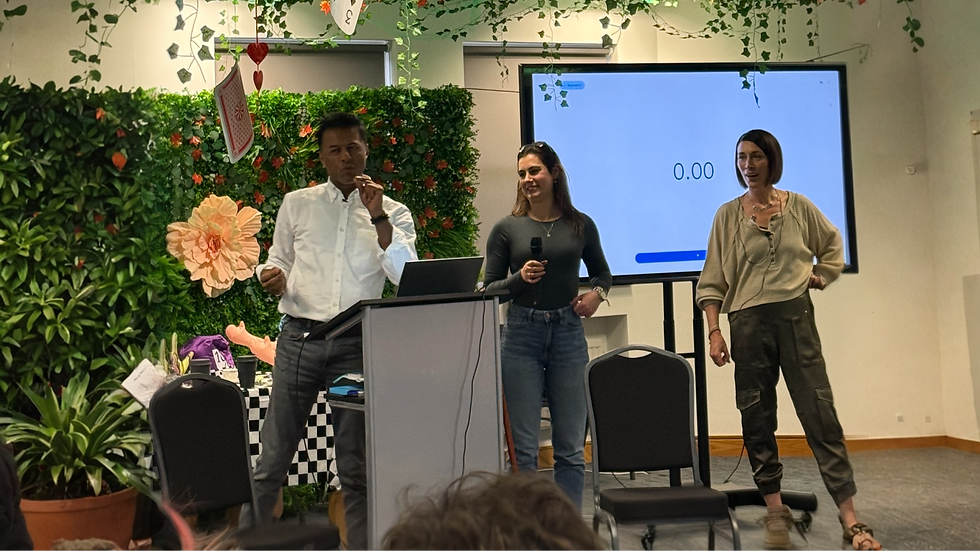
In my quieter, more reflective moments, I often find myself thinking about how my personal values and beliefs shape the way I lead. Leadership is never just a set of strategies or decisions it is an expression of who we are, what we stand for, and the principles we carry within us.
For me, those inner principles were shaped from childhood. I have always been a devout believer in Hanuman a deity who has felt close to me throughout my life. I’m not entirely sure whether it was his courage, his humility, or the stillness and strength he represents that first spoke to me, but I felt a deep connection from an early age. His stories were never distant mythology; they were teachings about how to live, how to serve, and how to respond when the world calls for courage.
For those unfamiliar, Hanuman is a deeply revered deity in the Hindu tradition, honoured as the embodiment of selfless service, moral bravery, protection, and unwavering devotion. He is celebrated not for material power, but for qualities that feel profoundly human:
purpose, integrity, resilience, and a commitment to doing what is right.
As I’ve grown older, and as my professional path has taken me deep into the world of health and social care, one story of Hanuman has stayed with me, guiding my understanding of what leadership can look like.
The Story of the Mountain of Medicine
In the ancient epic Ramayana, a young warrior named Lakshman is gravely wounded. His survival depends on a rare healing herb in the Himalayas. Hanuman is sent to retrieve it.
When he arrives, he faces an impossible dilemma:
he cannot identify which herb is the lifesaving one.
He could hesitate.
He could guess.
He could return empty-handed.
Instead, he makes a decision that has become symbolic of purposeful leadership:
He lifts the entire mountain and carries it back.
Many see this as a story of strength.
But the deeper lesson, for me, lies elsewhere:
When the purpose is clear protect life, safeguard dignity, decisive action matters more than perfect information.
Hanuman acted not from power, but from devotion, responsibility, and clarity of intent.
Why This Speaks to Leadership in Care
In health and social care, we encounter similar moments:
Information is incomplete
Systems are fragmented
The stakes are high
And people’s wellbeing depends on our response
Leadership in these moments is not about certainty.
It is about removing obstacles so others can be safe, supported, and able to thrive.
Sometimes we must “lift the mountain” not because it is easy, but because someone’s life or dignity depends on it.
In my own work, this often means:
Designing environments that feel like true homes
Challenging decisions when systems fail the vulnerable
Navigating funding and commissioning pressures with moral clarity
Building psychologically safe teams
Shaping cultures where compassion and professionalism stand side by side
This story reminds me that leadership is an act of service.
It is the willingness to carry what needs to be carried so others can live with dignity.
A Closing Reflection
Hanuman’s message is timeless:
Leadership is not about having all the answers.
It is about purpose, courage, and the willingness to act when the moment calls for it.
In care, our purpose is clear:
To protect dignity, honour personhood, and remove barriers.
And sometimes that means lifting mountains.
That, for me, is what true leadership looks like.


Comments